
Septic Tank Pumping Cost in Brevard County, FL
Septic tank pumping cost in Brevard County: for a typical home tank of about 1,000 to 1,500 gallons, plan on roughly $250 to $500. Buried lids, a larger tank or an urgent visit can push it higher. Most homes need a pump-out every 3 to 5 years.
Indicative 2026 planning range, not a fixed price or quote. Updated November 2026.
Need your septic tank pumped in Brevard County? Fill in the form or call for a fast, affordable septic tank pumping quote from our local septic tank pros.
Last reviewed: November 10, 2026
Request Septic Service
Request service · No obligation
Cost summary
Septic tank pumping prices in Brevard County by job type
Indicative 2026 planning ranges based on published Florida pricing guides, not quotes.
| Job | Indicative cost | Notes |
|---|---|---|
| Standard home tank (about 1,000–1,250 gallons) | $250 – $450 | Most Brevard homes with 2–4 bedrooms. Lids exposed or on risers, truck can park close to the tank. |
| Larger tank (1,500 gallons or more) or two compartments | Upper end of the range, or above $500 | More gallons to haul and dispose of. Large homes, duplexes and small commercial buildings often fall here. |
| Buried lids that need digging | About $50 – $150 per lid | Added when the lids are underground. Septic tank risers bring the lids to the surface so you stop paying this on every visit. |
| Overdue tank (10+ years since last pump-out) | Can add time and disposal cost | Heavy sludge and scum take longer to break up and remove. |
| Aerobic treatment unit (ATU) pump-out | Quote-only | Pumped when the maintenance company finds solids have built up. Separate from the maintenance contract Florida requires for these systems. |
| Urgent or after-hours visit | Usually higher than a scheduled visit | Booking before the tank backs up is almost always the cheaper option. |
What you pay for
What a septic tank pump-out in Brevard County includes
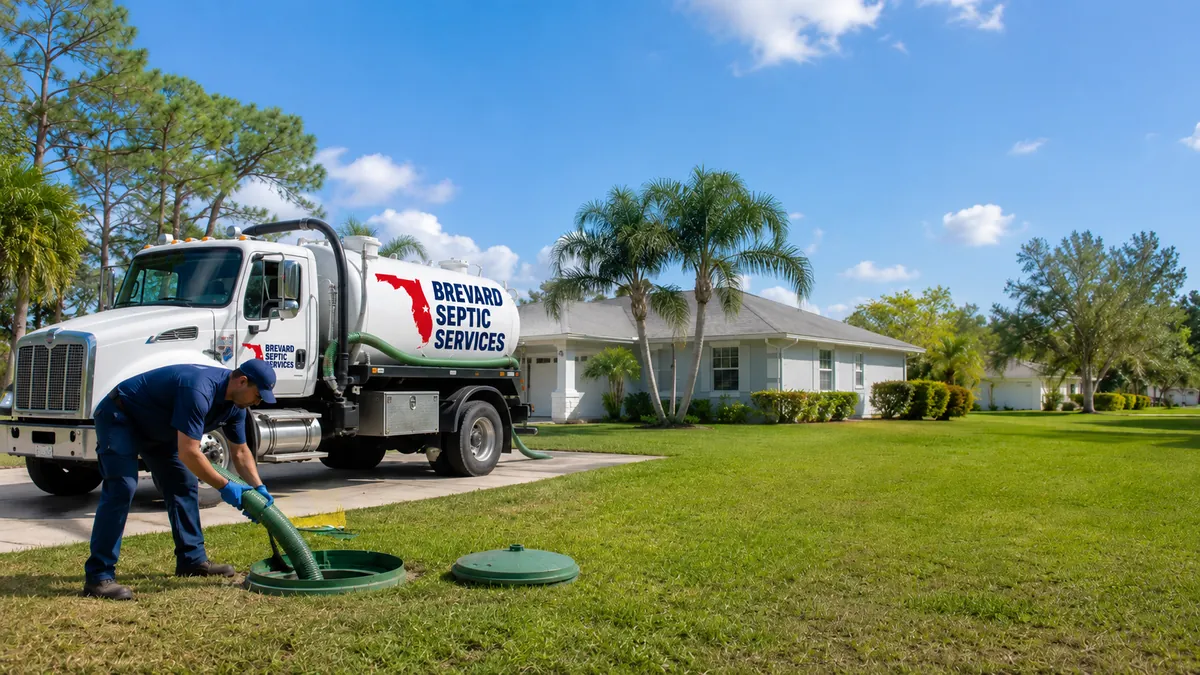
A standard pump-out usually covers the items below. Ask what is included before comparing prices, especially whether digging up buried lids is part of the quote.
- Locating the tank and opening the lids
- Pumping out liquid, scum and sludge from every compartment
- Hauling the septage to an approved disposal facility
- A visual check of the baffles, lids and tank walls while it is open
- A note of the sludge and scum levels so you know when to pump next
- Closing the lids and cleaning up the work area
Factors
What changes septic tank pumping cost in Brevard County
Tank size
Price follows gallons. A 1,000-gallon tank is the usual baseline for a Brevard home; bigger tanks cost more to pump and dispose of.
How easy the lids are to reach
Exposed lids or risers keep the visit short. Lids under sod, pavers or a deck mean digging first, which is the most common add-on.
Time since the last pump-out
A tank pumped on schedule is quicker to empty than one left for a decade.
Distance and truck access
Long hose runs, gated yards or a tank far from the driveway add time. Rural lots further from disposal facilities may carry a small surcharge.
System type
Conventional tanks are the simplest to pump. Aerobic and nitrogen-reducing systems, now common in Brevard because of Indian River Lagoon rules, have extra chambers and equipment.
Timing
Scheduled weekday service costs less than an urgent call after the tank has already backed up.
How often
How often to pump a septic tank in Brevard County
- Florida DEP advises having a septic tank inspected and pumped every 3 to 5 years by a state-licensed septage disposal service.
- The EPA lists four things that change how often a tank needs pumping: household size, total wastewater, the amount of solids in it, and tank size.
- More people or a smaller tank means sooner. A busy household on a 1,000-gallon tank should plan toward the 3-year end.
- Ask for the sludge and scum levels at every pump-out and keep the record. That tells you when the next one is due, and buyers ask for it when you sell.
Sources: Florida DEP Septic System Owner's Guide · EPA: How to Care for Your Septic System
Brevard County
Septic tank pumping in Brevard County: what to know
Pumping protects the drainfield
When sludge builds up past the outlet, solids flow into the drainfield and clog it. A pump-out every few years costs a few hundred dollars; a drainfield replacement costs thousands.
Aerobic and nitrogen-reducing systems
Many newer and replacement systems in Brevard are aerobic or nitrogen-reducing because of Indian River Lagoon protection rules. Under Chapter 62-6, F.A.C., these systems need a biennial operating permit and a maintenance contract with an approved maintenance entity. The pump-out itself is priced separately when the maintenance company finds it is needed.
Grants are for upgrades, not routine pumping
Brevard County’s Save Our Indian River Lagoon grants help eligible owners upgrade a septic system or connect to sewer. Routine pump-outs are a normal homeowner maintenance cost.
Selling or buying a home
A pump-out is often paired with a septic inspection before a closing so the inspector can see the tank empty. Ask whether you need a written inspection report as well as the pump-out.
References: FDEP: Enhanced Nutrient-Reducing Onsite Systems · Brevard Save Our Indian River Lagoon: Homeowner Grants
Get a quote
How to get a septic tank pumping quote in Brevard County
Pumping is one of the few septic jobs that can usually be quoted over the phone. Have these ready:
- Property address
- Tank size if you know it (it is on the original permit)
- When the tank was last pumped
- Whether the lids are exposed, on risers or buried
- Conventional, aerobic or nitrogen-reducing system
- Any warning signs: slow drains, gurgling, odors, wet spots or an alarm
FAQ
Septic tank pumping cost in Brevard County: FAQs
How much does septic tank pumping cost in Brevard County?
For a typical home tank of about 1,000 to 1,500 gallons, plan on roughly $250 to $500. That is an indicative 2026 planning range from published Florida pricing, not a fixed price or a quote. Buried lids, a larger tank or an urgent visit can push the cost higher. Updated November 2026.
How often should I pump my septic tank in Brevard County?
Florida DEP advises having the tank inspected and pumped every 3 to 5 years. Larger households or smaller tanks need it sooner. The sludge and scum levels recorded at each pump-out are the best guide to your own schedule.
Why does digging up the lids cost extra?
If the lids are buried, the tank has to be uncovered before it can be pumped, usually about $50 to $150 per lid. Installing septic tank risers brings the lids to ground level so you avoid that charge on future visits.
Does a pump-out include an inspection?
Most pump-outs include a quick visual check of the baffles, lids and tank while it is open. A formal written septic inspection, for a home sale for example, is a separate service.
Do aerobic systems cost more to pump?
Aerobic treatment units have extra chambers and equipment, so ask for a quote for your system. Florida also requires a maintenance contract and a biennial operating permit for these systems, which is a separate cost from pumping.
What happens if I never pump my tank?
Solids eventually overflow into the drainfield and clog it. The result is backups, wet spots in the yard and, in the worst case, a drainfield replacement that costs many times more than regular pumping.
Is there a grant to pay for septic pumping in Brevard?
Brevard County’s Save Our Indian River Lagoon grants are for upgrading a septic system or connecting to sewer on eligible properties, not for routine pumping. Check eligibility directly with Brevard County.
How do I get a septic pumping quote?
Fill in the form on this page or call (321) 613-7697. Tell us the address, tank size if you know it and when it was last pumped, and our local septic tank pros will give you a fast, affordable septic tank pumping quote before any work begins.
Get a septic tank pumping quote in Brevard County
Tell us the address and when the tank was last pumped. Our local septic tank pros will come back with a fast, affordable quote.
Last reviewed: November 10, 2026 · Indicative 2026 planning ranges, not quotes.